
actuallygoodtools.com
Actually Good Tools: Software tools ranked by the security headers their websites send
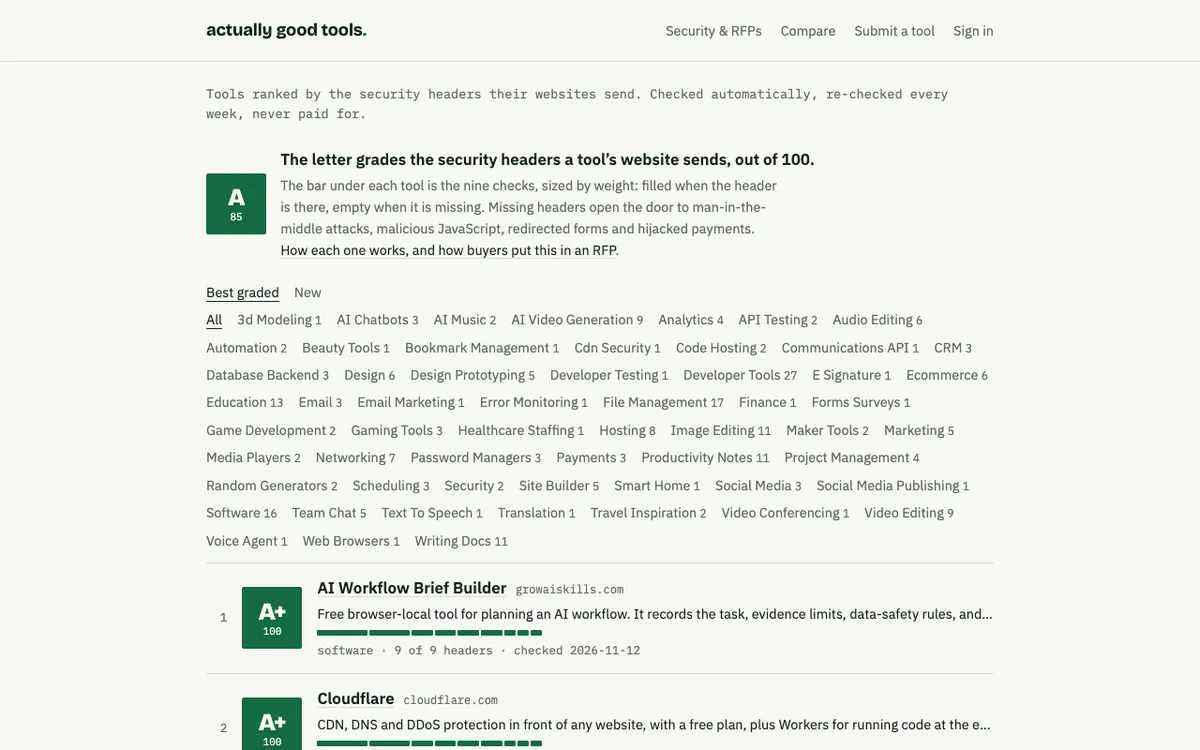
Every listed tool’s website is scanned for nine security headers and graded out of 100. The grade alone decides the ranking. It is checked automatically, re-checked every week, and never paid for.
Free to browse. Free to list a tool.
- What it is
- Software directory ranked by security headers
- Ranking
- Nine header checks, graded out of 100
- Freshness
- Every tool re-scanned weekly
- Listing
- Free, checked for spam only
What is Actually Good Tools?
Actually Good Tools is a directory of software tools ranked by one thing you can check for yourself: the security headers each tool’s website sends. Before a website sends a word of its page, it sends the browser a few instructions. Nine of them decide whether a man in the middle can rewrite the page, whether someone else’s JavaScript can run on it, and whether a sign-in or checkout form can be quietly pointed somewhere else.
Each tool gets a letter grade out of 100, and higher grades rank higher. Every tool is scanned again every week, so a vendor who fixes their headers moves up without asking anyone. The Security & RFPs page explains what each missing header exposes, and how buyers can put a minimum grade into an RFP.
Anyone with a free account can submit a tool. Submissions are checked for spam and nothing else, nobody can pay for a position, and labelled affiliate links never change the order. The ranking used to be community upvotes; votes already cast are kept but no longer count. Actually Good Tools is run by DevOpser and built on the open-source DevOpser template.
How Actually Good Tools works
A tool is submitted
Anyone with a free account can add one. Submissions are checked for spam only.
Its website is scanned
Nine security headers are checked, each worth a set number of points out of 100.
The grade sets the rank
Higher scores rank higher, and ties are listed alphabetically.
It is checked again weekly
Grades move as vendors fix or drop headers, and a weekly rundown reports the changes.
What you get
Made for
- Buyers vetting software vendors
- Security and procurement teams writing RFPs
- Vendors who want to prove their posture
- Indie makers who want a free listing
- A grade anyone can check
- The headers a website sends are public, so every grade can be verified from outside.
- What each gap exposes
- Missing headers are tied to the attacks they allow: man-in-the-middle, malicious JavaScript, redirected forms and hijacked payments.
- RFP-ready
- Guidance and wording for asking vendors to meet a minimum grade.
- Weekly re-checks
- Every tool is re-scanned each week, so grades stay current.
- Comparison pages
- Two tools side by side, including their security grades.
- A weekly rundown
- An opt-in email with the top ten by grade, grade changes and new tools.
Actually Good Tools questions, answered
How are tools ranked on Actually Good Tools?
By the security headers each tool’s website sends. Every site is scanned for nine headers, each worth a set number of points out of 100. Higher scores rank higher, and ties are listed alphabetically.
How often are grades updated?
Every listed tool is scanned again every week, so a vendor who fixes their headers moves up without asking anyone.
Does it cost anything to list a tool?
No. Listing takes a free account, which keeps spam bots out, and submissions are checked for spam only.
Can a company pay for a better position?
No. The security scan is the only thing that moves a tool. The site does not take payment to add a tool, keep one listed or mention one in the weekly rundown, and labelled affiliate links never change the order.
What happened to upvotes?
The ranking used to be community upvotes. Hardly anyone voted, so the site switched to a grade anyone can check. Votes already cast are kept but no longer affect anything.
How do buyers use the grades?
The Security & RFPs page explains what each missing header exposes and gives RFP wording that asks vendors for a minimum grade.
Check a vendor’s security before you buy.
See how each tool’s website grades, or list your own tool for free.